
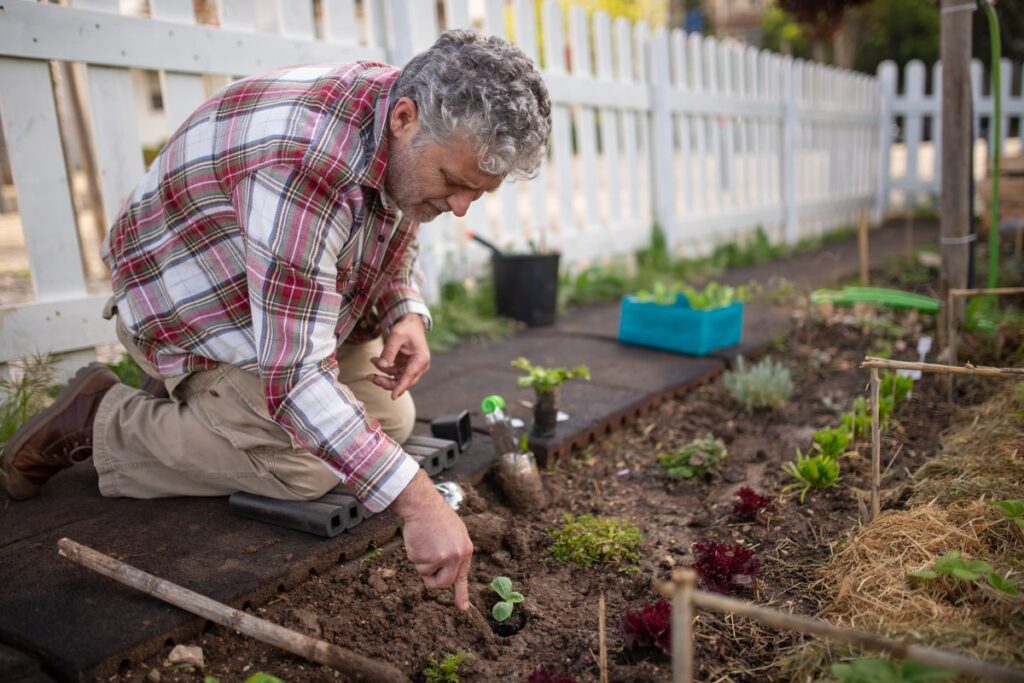
Quick Answer: Most first-time gardening mistakes come down to a handful of predictable patterns — starting too big, misjudging sunlight, watering inconsistently, and giving up after the first setback rather than treating it as a normal part of learning. Recognising these patterns in advance prevents much of the frustration that causes people to abandon gardening after one disappointing season.
Starting Too Big
Spring enthusiasm reliably outpaces the realistic ongoing effort a large garden demands through a full season — weeding, watering, and harvesting all scale with plot size, and a large plot that felt manageable at planting time can quickly become overwhelming by midsummer.
A smaller plot, fully maintained and genuinely enjoyed from start to finish, teaches considerably more for the following year than a large one abandoned partway through to encroaching weeds.
It’s worth remembering that plot size can always increase in future seasons once real experience and confidence have been built, whereas an oversized first attempt often teaches mainly frustration rather than any transferable gardening skill.
The Most Common Mistakes, at a Glance
| Mistake | Why it happens | Better approach |
|---|---|---|
| Starting too big | Spring enthusiasm outpaces realistic ongoing effort | Begin with a small plot or a few containers |
| Misjudging sunlight | A quick glance doesn’t reflect a full day’s actual light | Observe the site across a full day before choosing plants |
| Watering inconsistently | Reacting to how plants look rather than a steady routine | Water on a consistent schedule, checking soil moisture directly |
| Ignoring soil quality | Assumed to matter less than plant variety choice | Add compost or organic matter before planting |
| Planting at the wrong time | Local frost dates and climate aren’t accounted for | Check the local average last frost date before starting |
Misjudging Sunlight
A spot that looks sunny during a brief midday glance can still fall well short of the six-plus hours of direct light many vegetables genuinely need, particularly once nearby structures or trees cast shade at other points during the day.
Observing a potential planting area at several different times across a full day, rather than relying on one quick assessment, gives a considerably more accurate and reliable picture before any planting decisions are made.
Watering Inconsistently
Watering heavily in response to visibly wilting plants, then neglecting the garden for days afterward, stresses plants considerably more than a steady, moderate, and genuinely consistent routine would.
This pattern often stems from watering reactively, based on how a garden looks that particular day, rather than following a planned, regular routine checked against actual soil moisture rather than surface appearance alone.
Ignoring Soil Quality
It’s easy to assume that choosing the right vegetable variety matters more than the soil it’s planted in, but poor soil structure and low nutrient content will limit almost any plant’s growth regardless of how well-chosen the variety otherwise is.
Working compost or other organic matter into soil before planting is a comparatively small, one-time effort that pays off across the entire growing season that follows.
Planting at the Wrong Time
Planting too early, before the local last frost date has genuinely passed, risks losing tender young plants to a late, unexpected cold snap. Planting too late can shorten the productive growing window for crops that need a longer season to properly mature and ripen.
Checking a reliable local source for average frost dates, rather than assuming a date that worked in a different region or a different year, removes much of the guesswork involved in getting this timing right.
Not Thinning Seedlings
Seeds are often sown more densely than the plants will eventually need, specifically to allow for some inevitable germination failure, but this means thinning — removing some of the weaker seedlings — is a genuinely necessary step many beginners skip out of reluctance to remove a seedling that’s already growing.
Overcrowded seedlings left unthinned compete directly for light, water, and nutrients, which typically results in a larger number of smaller, weaker plants overall rather than the healthier, more productive plants that proper thinning would have allowed to develop given the same space.
Not Researching a Plant’s Needs Before Buying
It’s common to choose a vegetable or ornamental plant purely because it looks appealing at a garden centre, without checking whether it actually suits the available sunlight, climate, or space, only to discover the mismatch weeks or months later once it’s already struggling.
A brief check of a plant’s basic requirements before buying — sunlight needs, expected mature size, and whether the local climate genuinely suits it — prevents a considerable share of the disappointment that first-time gardeners otherwise attribute to their own lack of skill, when the actual issue was a poor match from the outset.
Skipping Regular Maintenance Tasks
Removing spent flowers, cutting back certain plants after an initial flush, and keeping on top of weeding while it’s still manageable are all small, unglamorous tasks that are easy to deprioritise, but neglecting them consistently tends to compound into a much larger job later in the season.
Setting aside a short, fixed, recurring slot of time for general garden upkeep, rather than waiting until problems become visibly obvious, keeps these small tasks manageable and prevents the sense of being overwhelmed that often follows weeks of accumulated neglect.
Giving Up After One Bad Season
A disappointing first season is genuinely common and doesn’t reliably predict how future seasons will go, since gardening involves a real, ongoing learning curve specific to a particular soil, climate, and set of growing conditions that simply takes direct experience to understand well.
Treating an early setback as expected, useful information rather than proof that gardening “isn’t for you” tends to separate people who eventually become confident, successful gardeners from those who abandon the hobby entirely after one difficult year.
Turning Mistakes Into Useful Information
Keeping simple notes through a growing season — what was planted where, when, and how each plant actually performed — turns each season’s inevitable mistakes into genuinely useful information for the next one, rather than repeating the same guesswork indefinitely.
Even a few brief notes, revisited the following spring before planting begins again, can meaningfully improve decisions around timing, spacing, and plant choice, without needing any more elaborate record-keeping system than that.
Many experienced gardeners describe their own early seasons in strikingly similar terms to a genuine beginner’s first attempt, which is worth remembering when a first season doesn’t go entirely to plan — the learning curve is close to universal, not a sign of any particular lack of aptitude.
Key Takeaways
In short
- Starting smaller than initial enthusiasm suggests prevents the overwhelm that leads many first gardens to be abandoned partway through the season.
- Assessing sunlight across a full day, not a single glance, prevents one of the most common and consequential planning mistakes.
- A consistent watering routine, checked against actual soil moisture, produces better results than reactive watering based on appearance.
- Soil preparation with compost affects overall success as much as which specific vegetable varieties are chosen.
- A disappointing first season is genuinely common and reflects a learning curve, not evidence that gardening isn’t a good fit.
- Checking a plant’s actual requirements before buying prevents a considerable share of the mismatches that lead to early disappointment.
Frequently Asked Questions
Why did my vegetables barely grow in my first garden?
This usually traces back to one of a few common causes: insufficient sunlight at the site, inconsistent watering, or soil that wasn’t adequately prepared with compost or organic matter before planting.
How do I know if I’m overcrowding my seedlings?
If seedlings are touching or clearly competing for space well before they reach maturity, thinning is usually needed. Following the spacing guidelines on a seed packet, even when it looks sparse at planting time, generally prevents this.
Is it normal to have a bad first gardening season?
Yes — a disappointing first season is genuinely common and reflects a real learning curve specific to your soil, climate, and conditions, rather than evidence that gardening isn’t a good fit for you.
How important is soil quality compared to choosing the right plants?
Soil quality affects overall success at least as much as plant choice. Poor soil structure and low nutrients limit growth regardless of how well-suited a particular vegetable variety otherwise is to the local climate.
What’s the single easiest change to make for a better second season?
Reviewing what actually happened in the first season, honestly and specifically, tends to matter more than any single new technique — most improvement comes from correcting a small number of clear, identifiable mistakes.
Should I keep notes during my first gardening season?
Yes — even brief notes on what was planted where, when, and how it performed turn each season’s mistakes into useful information for the next one, rather than repeating the same guesswork.
Why do experienced gardeners still have bad seasons sometimes?
Weather, pests, and soil conditions vary meaningfully from year to year, so even experienced gardeners have disappointing seasons occasionally — it reflects the inherent variability of gardening rather than a lasting decline in skill.