
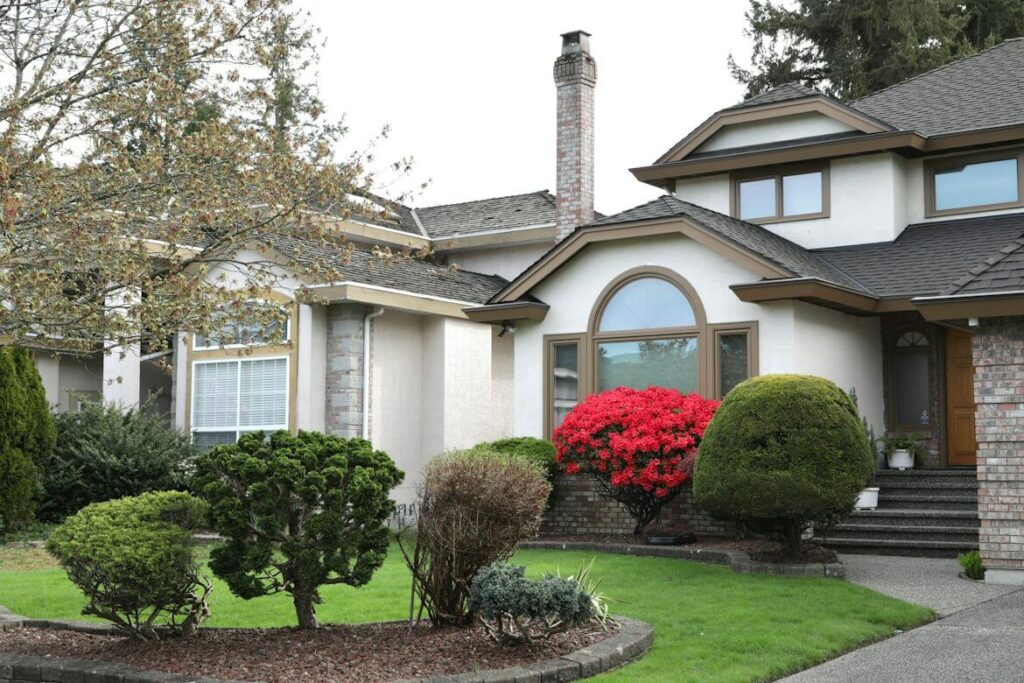
A healthy lawn gives the entire property a cleaner and more cared-for appearance. Paint, lighting and decorative details still matter, but struggling grass can draw attention away from those upgrades. Strong curb appeal starts below the visible blades, where soil conditions and maintenance habits determine how well turf handles heat, foot traffic and seasonal stress.
First Impressions Start at the Curb
Visitors see the front lawn before they notice new door hardware or updated windows. Consistent color, defined edges and an even mowing height create a visual frame for the house. The effect is especially clear when grass meets a driveway, walkway or planting bed.
The connection between landscaping and curb appeal also extends beyond the lawn itself. Trimmed shrubs, clean paths and healthy turf make the property feel orderly without requiring elaborate design. If bare spots or weeds keep returning, use a homeowner’s guide to lawn care to assess planning, soil analysis and routine maintenance before spending money on cosmetic additions.
Soil Vitality Dictates Surface Beauty
Grass depends on soil for water, oxygen and nutrients, so surface problems often begin underground. Compacted soil limits root growth and causes water to pool or run off. A soil test can identify pH and nutrient levels, helping you avoid applying fertilizer the lawn doesn’t need.
Check compaction by pushing a screwdriver several inches into moist ground. Strong resistance may indicate that core aeration would help. Thatch should also be inspected, since a layer thicker than about half an inch can interfere with water movement.
Water deeply enough to moisten the root zone, then allow the surface to dry between sessions. This pattern encourages deeper roots and better drought tolerance than frequent, shallow watering.
Common Grass Mistakes to Avoid
Cutting grass too short is one of the fastest ways to weaken it. Removing more than one-third of the blade at a time reduces the plant’s ability to produce energy and can expose soil to weed growth. Keep mower blades sharp because dull edges tear grass and leave pale, ragged tips.
Heavy fertilizer applications can also scorch turf or push rapid growth that demands extra mowing and water. Follow soil test results and product directions, then sweep stray granules off hard surfaces.
Pay attention to timing. Mowing wet grass creates clumps and uneven cuts, while watering during the hottest part of the day increases evaporation. Early morning watering gives moisture time to reach the roots before temperatures rise.
Align Architecture With Greenery
The best lawn layout supports the home’s proportions and materials. A formal facade may suit straight bed lines and restrained planting, while a cottage-style home can accommodate softer curves and layered borders. Keep foundation plants below windows and maintain open sightlines to the entry.
Color matters too. Deep green turf can balance light siding, brick or stone, while nearby foliage adds texture without crowding the structure. In areas where natural grass repeatedly fails because of deep shade or intense use, artificial turf may be part of the design discussion. Consider drainage, installation quality and visual compatibility before choosing it.
Good curb appeal feels connected from the street to the front door. Once soil supports steady growth, simple details such as crisp edging and a clear walkway can finish that connection without overwhelming the house.