
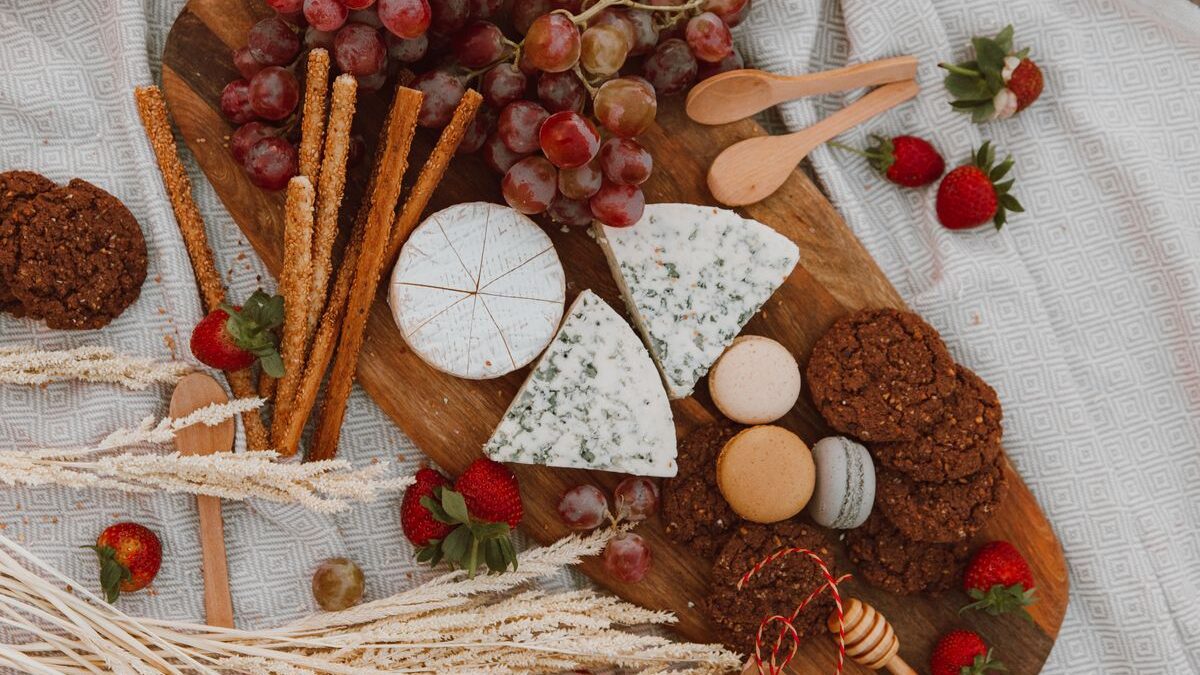


Quick Answer: A good cheese board balances variety in texture, flavour intensity, and milk type — typically a mix of soft, semi-hard, and hard cheeses alongside at least one blue or strong option — paired with a small number of complementary extras like fruit, nuts, and bread rather than an overwhelming spread. The arrangement and serving temperature matter almost as much as the cheese itself, since both guide how people naturally taste through the board.
Why Variety Matters More Than Quantity
It’s tempting to judge a cheese board by how full it looks, but a board covered in six similar semi-hard cheeses offers less actual variety than one built from three or four genuinely different textures and intensities. Variety, not volume, is what makes a board interesting to taste through.
The three dimensions worth actively varying are texture (soft through to hard), flavour intensity (mild through to pungent), and milk type (cow, goat, sheep, or a blend of more than one). A board that varies along all three tends to feel considered rather than simply generous.
This also solves a practical problem: guests with different preferences almost always find something they genuinely enjoy on a varied board, rather than everyone working through the same narrow flavour range all evening.
The Main Cheese Categories
| Category | Characteristics | Pairing notes |
|---|---|---|
| Soft and fresh | Mild, creamy, high moisture | Pairs well with fresh fruit and honey |
| Soft-ripened | Buttery interior, edible rind, moderate intensity | Pairs well with baguette and light preserves |
| Semi-hard | Firm but sliceable, balanced flavour | Versatile; works with most fruits and nuts |
| Hard and aged | Dense, concentrated, sometimes crystalline | Pairs well with dried fruit and stronger honey |
| Blue | Sharp, salty, pungent | Pairs well with something sweet to offset the intensity |
How Many Cheeses Is Actually Enough
For most gatherings, three to five cheeses is the practical sweet spot. Fewer than that limits variety unnecessarily; more than that tends to cause palate fatigue, where every cheese after the fourth or fifth starts tasting similar regardless of how different they actually are.
A useful selection principle is picking one from each of several categories above rather than several from the same one — one soft, one semi-hard, one aged, and one blue covers a genuinely wide range without overwhelming anyone trying to taste through the whole board.
Building in the Right Order: Mild to Strong
Strong flavours linger on the palate and can make anything tasted afterward seem duller than it actually is. Working from the mildest cheese to the strongest, rather than tasting randomly, keeps each cheese’s actual character clear.
This is part of why blue cheese is usually positioned as a natural endpoint rather than a starting point — its intensity would otherwise flatten the more delicate flavours still waiting to be tasted.
Choosing Accompaniments That Actually Complement
Fresh fruit — apple, pear, grapes, or figs depending on season — provides acidity and sweetness that cuts through richer, fattier cheeses, which is why fruit and cheese are paired so consistently across different food cultures rather than by coincidence.
Dried fruit and honey work particularly well with harder, more intensely flavoured cheeses, since their concentrated sweetness balances a sharp or salty profile more effectively than fresh fruit alone often can.
Nuts add a textural contrast that a board of only cheese and bread lacks, and a small amount of something crunchy tends to make the whole board feel more considered without adding much complexity.
Bread and crackers exist mainly as a neutral vehicle, which means variety here matters less than it does with the cheese itself — one or two simple, not-too-flavoured options usually serve the board better than several competing for attention.
Temperature and Timing
Cheese served straight from the refrigerator tastes noticeably duller than the same cheese at room temperature, since cold temporarily mutes both aroma and flavour. Taking cheese out thirty minutes to an hour before serving, depending on size and how firm it is, makes a real difference.
That window also has a practical food safety dimension — cheese shouldn’t sit out indefinitely, particularly softer varieties, so timing it to come to temperature shortly before serving rather than hours in advance keeps both flavour and safety in mind.
Arranging the Board Visually
A good arrangement starts with anchor points — placing the largest or most visually distinct cheeses first, spaced apart, then filling in around them with smaller accompaniments rather than starting with the small items and running out of room.
Leaving some visible negative space, rather than covering every inch of the board, tends to look more intentional than a completely packed surface, and also makes each element easier to actually identify and reach without disturbing its neighbours.
Using small bowls for anything loose — honey, nuts, olives — keeps the board tidy and prevents these items from sliding into and muddying the cheese arrangement around them.
Planning How Much Cheese Per Person
As a rough planning guide, allowing somewhere around 80 to 120 grams of cheese per person works reasonably well when the board is served as an appetiser alongside other food, and toward the higher end of that range, or beyond it, when cheese is effectively standing in for a full meal.
This isn’t a precise science, since appetite and how many other dishes are on offer both affect how much actually gets eaten, but it’s a far more useful starting point than guessing, particularly when buying for a specific number of guests rather than casually topping up an already generous board.
Drink Pairings, Briefly
Wine is the most commonly discussed pairing, and as a general starting principle, lighter, higher-acid wines tend to suit milder cheeses, while fuller-bodied reds or sweeter wines tend to stand up better to stronger, aged, or blue cheeses without being overwhelmed.
Cheese doesn’t need to be paired with wine specifically — a good sparkling drink, or even a well-chosen beer, can complement a board just as effectively, since the same underlying principle of matching intensity to intensity applies regardless of what’s in the glass.
Common Mistakes to Avoid
Pre-slicing cheese too far in advance is one of the most common mistakes, since cut surfaces dry out and oxidise, dulling both appearance and flavour well before serving time.
Using a single knife across every cheese carries flavour from one to the next, particularly with something pungent like blue cheese, which can noticeably affect the taste of a milder cheese cut with the same blade afterward.
Overcrowding the board with too many competing accompaniments can bury the cheese itself, which should remain the clear focus rather than one element among many equally prominent items.
Adapting for Dietary Needs
For guests avoiding dairy, a small dedicated section with plant-based alternatives, clearly separated and labelled, tends to work better than mixing them into the main arrangement where they can be mistaken for something they’re not.
Gluten-free crackers are simple to include alongside standard options, and labelling anything containing nuts clearly is worth doing given how common nut allergies are — a small handwritten note beside the board takes little effort and meaningfully reduces risk for guests with allergies.
Key Takeaways
In short
- Variety in texture, flavour intensity, and milk type matters more than the total number of cheeses on the board.
- Three to five cheeses is a practical sweet spot; more than that tends to cause palate fatigue rather than add genuine variety.
- Taste from mildest to strongest, and treat blue cheese as an endpoint rather than a starting point.
- Let cheese come to room temperature before serving, but not so far in advance that food safety becomes a concern.
- Clearly label items for common allergies and dietary restrictions rather than assuming guests will ask.
Frequently Asked Questions
How far in advance can I prepare a cheese board?
The board can be assembled an hour or so before serving, but cheese is best cut closer to serving time rather than hours ahead, since cut surfaces dry out and lose flavour the longer they’re exposed to air.
Should cheese be served cold or at room temperature?
Room temperature almost always tastes better, since cold temporarily mutes both aroma and flavour. Taking cheese out thirty minutes to an hour before serving is generally enough.
How many different cheeses should I include?
Three to five is a practical range for most gatherings — enough for genuine variety without causing the palate fatigue that comes from tasting through too many similar options.
What should I serve alongside the cheese itself?
Fresh and dried fruit, honey, nuts, and simple bread or crackers cover most of what complements cheese well, since they add acidity, sweetness, and texture that balance richer or saltier cheeses.
Do I need a separate knife for each cheese?
Ideally yes, or at least a separate knife for stronger cheeses like blue, since a shared knife can carry a pungent flavour into a milder cheese cut with the same blade afterward.
Stay connected