
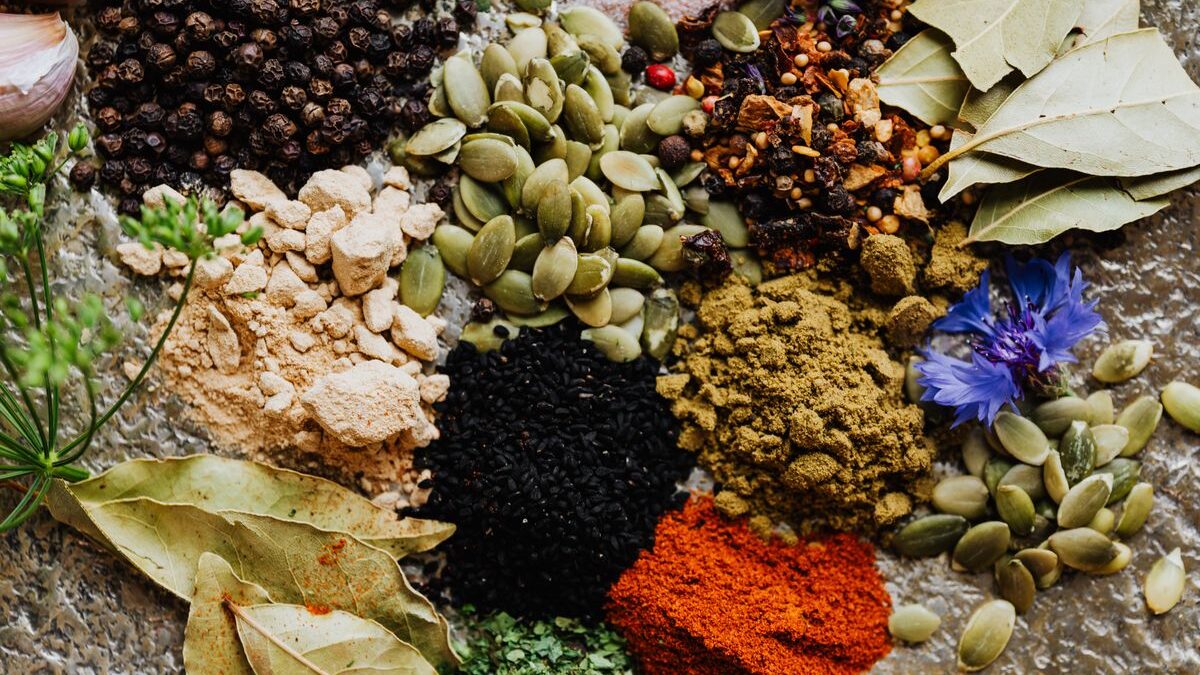

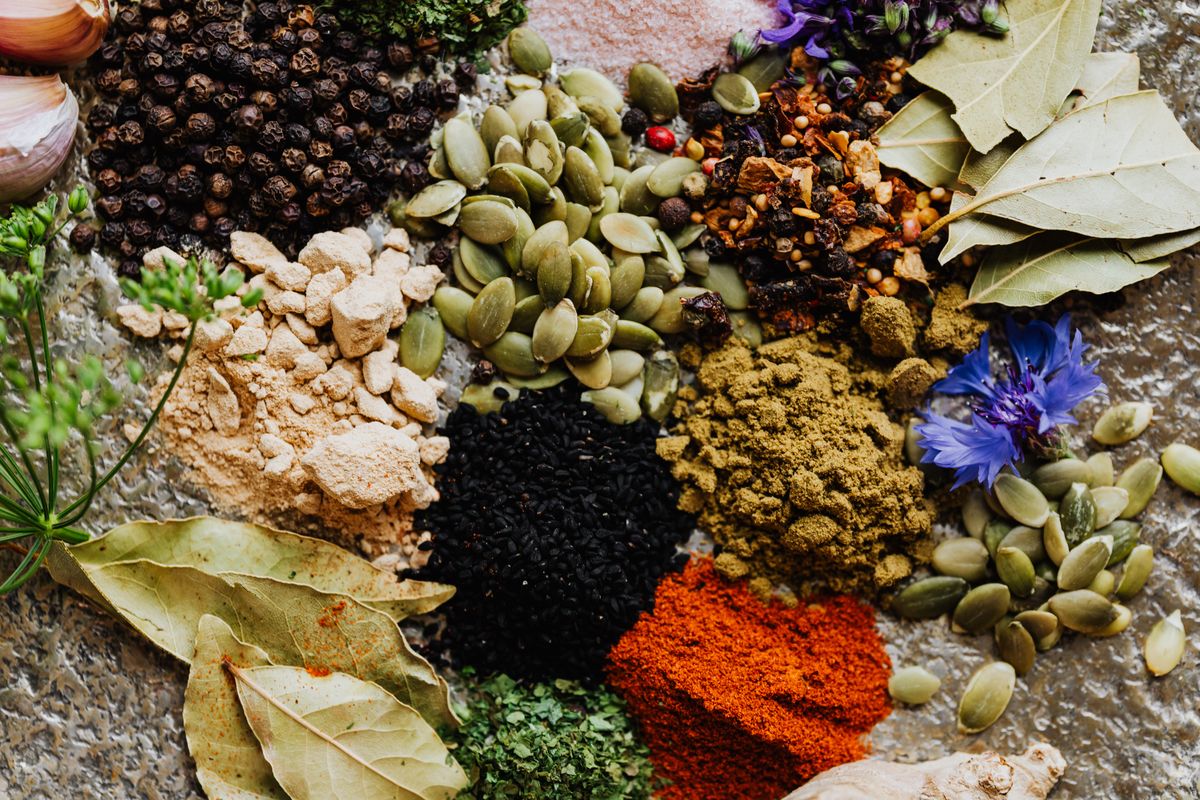
Quick Answer: Herbs come from the leafy green parts of a plant, usually used fresh or dried in relatively large amounts. Spices come from other parts of a plant — seeds, bark, roots, or fruit — and are almost always dried and used in much smaller amounts because they’re more concentrated. The distinction is about which part of the plant is used, not about flavour strength or where the plant originally comes from.
The Actual Botanical Distinction
The rule that actually defines the difference is simpler than it’s often made out to be: herbs are the leafy, green parts of a plant, while spices come from everything else — seeds, bark, roots, buds, or dried fruit.
This means the common assumption that spices are simply “stronger herbs” isn’t quite right, either. Basil and cinnamon aren’t different points on the same single scale; they come from entirely different parts of entirely different plants, and the leaf-versus-other-part distinction is what actually separates the two categories from one another.
Some plants make this especially clear, because the same individual plant produces both a recognisable herb and a distinct spice, depending entirely on which part of it is used.
Same Plant, Two Categories
| Plant | Herb (leaf) | Spice (seed or other part) |
|---|---|---|
| Coriander | Coriander leaf (also called cilantro) | Coriander seed |
| Dill | Dill leaf | Dill seed |
| Mustard | Mustard greens | Mustard seed |
| Fennel | Fennel fronds | Fennel seed |
Coriander is the clearest example: the fresh leaf and the dried seed come from the same plant, taste noticeably different from one another, and are used in entirely different ways in cooking, despite sharing both a name and a common botanical origin.
Why Fresh Herbs and Dried Herbs Behave Differently
Fresh herbs carry a high water content alongside their flavour compounds, which is part of why they lose potency quickly once cut or crushed — the volatile oils responsible for aroma and taste evaporate readily once the leaf’s surface is broken.
Drying concentrates what’s left behind once the water is removed, which is why dried herbs are used in smaller quantities than the fresh equivalent, and why a recipe calling for both usually adds fresh herbs much later in cooking, or at the very end, to preserve what would otherwise cook off entirely.
How Spices Get Their Concentrated Flavour
Spices are typically already in a naturally concentrated, low-moisture form even before any deliberate drying — seeds, bark, and roots simply hold flavour compounds more densely than a soft leaf does.
Whole spices retain their flavour considerably longer than ground versions, since grinding exposes far more surface area to air, accelerating the loss of the essential oils responsible for aroma and taste. This is why whole spices, ground closer to the time of use, generally deliver a noticeably stronger result than pre-ground spice that’s been sitting for months.
Building a Basic Collection
An aromatic base: onion, garlic, ginger — used in some form across a huge range of cuisines
Warming spices: cinnamon, cumin, coriander seed — for depth rather than heat
Heat: chilli in its various forms, black pepper
Finishing herbs: parsley, coriander leaf, basil — added at the end for brightness rather than cooked through
Storage: Getting It Wrong Costs You Flavour
Light, heat, and humidity degrade both herbs and spices, but at different rates. Dried herbs generally lose noticeable potency within about a year; whole spices can hold reasonably well for two to three years if stored properly, while ground spices degrade meaningfully faster than their whole equivalents.
A cool, dark cupboard, rather than a rack mounted near a stove or in direct sunlight, protects flavour far longer than convenience of location would suggest — the classic spice rack beside the hob is, ironically, one of the worst places to keep them.
When to Add Each During Cooking
Dried herbs generally benefit from being added earlier in cooking, giving them time to rehydrate and infuse into a dish, since their concentrated form doesn’t release flavour as readily as a fresh leaf does.
Fresh herbs are typically added late, or used raw as a garnish, since sustained heat destroys much of what makes them worth using fresh in the first place.
Many spices benefit from being briefly cooked in oil before other ingredients are added — a technique often called blooming — which helps release fat-soluble flavour compounds more fully than adding the same spice directly to a watery liquid.
Deciding When Fresh Is Worth the Extra Cost
Fresh herbs are usually worth buying when they’re the star of a dish rather than a background note — a herb salad or a pesto genuinely depends on fresh basil in a way that a slow-cooked stew doesn’t depend on fresh thyme, where the dried version does a perfectly good job over a long cooking time.
As a rough guide, the longer something cooks and the more other flavours are present, the less the fresh-versus-dried distinction tends to matter for herbs specifically; for a dish eaten raw or barely cooked, fresh is usually worth seeking out.
Toasting Whole Spices
Briefly toasting whole spices in a dry pan before grinding or using them releases additional aromatic compounds through gentle heat, in much the same way blooming in oil does, and is a simple technique that noticeably deepens flavour for very little extra effort.
The difference between a toasted and untoasted spice is often more noticeable than the difference between two different brands or origins of the same spice, which makes it one of the more genuinely high-impact techniques available to a home cook working with spices.
Common Mistakes
Substituting dried herbs for fresh at a one-to-one ratio typically overpowers a dish, since dried herbs are considerably more concentrated — a rough rule of using about a third of the fresh quantity when substituting dried is a more reliable starting point.
Adding delicate fresh herbs, like basil, too early in cooking wastes much of their character, since prolonged heat breaks down the compounds responsible for their distinct aroma.
Buying ground spice in large bulk quantities on the assumption it saves money often backfires, since most home cooks use spice slowly enough that a large jar goes stale long before it’s finished.
A Few Pairings Worth Knowing
Warming spices — cinnamon, nutmeg, cardamom — pair naturally with sweeter dishes across a wide range of food traditions, which is part of why they show up so consistently in baked goods regardless of culinary origin or regional tradition.
Fresh herbs generally pair well with acidity — a squeeze of citrus or a splash of vinegar tends to brighten fresh herbs rather than compete with them, which is why herb-and-acid combinations appear so often together in dressings and finishing touches across many different cuisines.
Building familiarity with a small core set of herbs and spices, and how each behaves in cooking, tends to be more useful in the long run than accumulating a large, rarely used collection — a well-used dozen options generally serves a home cook better than a cupboard of forty jars, most of which are reached for only once or twice a year and quietly go stale in the meantime.
Key Takeaways
In short
- Herbs come from leafy plant parts; spices come from everything else — seeds, bark, roots, and dried fruit.
- Some plants, like coriander and dill, produce both a herb and a spice from the same plant, depending which part is used.
- Whole spices hold their flavour far longer than ground versions, since grinding exposes more surface area to air.
- Store both herbs and spices away from heat and light — a cupboard, not a rack beside the stove.
- Substituting dried herbs for fresh generally needs about a third of the quantity, since dried herbs are more concentrated.
Frequently Asked Questions
Is the difference between herbs and spices just about flavour strength?
No — the actual distinction is about which part of the plant is used. Herbs come from leaves; spices come from seeds, bark, roots, or other non-leaf parts. Flavour strength varies within both categories.
Can the same plant produce both a herb and a spice?
Yes — coriander is the clearest example, where the fresh leaf (cilantro) and the dried seed come from the same plant but taste different and are used in different ways.
How much dried herb should replace fresh in a recipe?
A common starting ratio is about a third of the fresh quantity, since dried herbs are more concentrated, though this varies somewhat by the specific herb.
Why do whole spices last longer than ground ones?
Grinding exposes far more surface area to air, which accelerates the loss of the essential oils responsible for flavour and aroma. Whole spices, ground closer to the time of use, generally taste noticeably stronger.
Where’s the best place to store herbs and spices?
A cool, dark cupboard rather than a rack near the stove or in direct sunlight — heat, light, and humidity all degrade flavour faster than most people expect.
Stay connected