
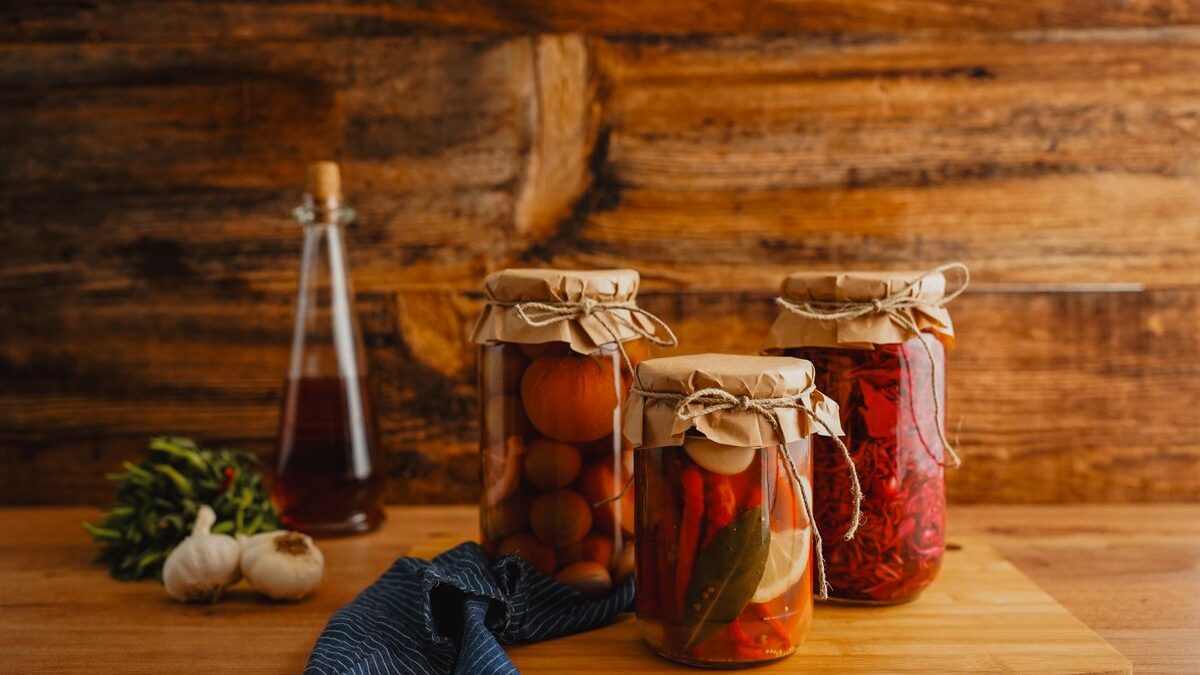


Quick Answer: Fermentation is a process where microorganisms — bacteria, yeast, or mould — break down sugars and other compounds in food, producing acids, alcohol, or gases as by-products. It’s one of the oldest food preservation methods known, and it’s also what gives foods like yoghurt, bread, and pickles their distinctive tang, texture, and considerably extended shelf life.
The Basic Science, Without the Jargon
At its core, fermentation is essentially microorganisms eating. Bacteria, yeast, or mould consume sugars naturally present in a food, and as they do, they produce something else as a by-product — an acid, an alcohol, or a gas, depending on which specific organism is doing the work.
That by-product is exactly what defines the food it creates: the acid in yoghurt, the alcohol in wine, and the carbon dioxide that makes bread rise are all simply the waste product of a microorganism converting sugar into energy for its own use.
Which specific microorganism does the work depends heavily on the starting environment — the type of food, the presence or absence of oxygen, the temperature, and often the deliberate introduction of a specific starter culture, all shape which organisms thrive and which by-product ends up dominating the result.
The Main Types of Fermentation
| Type | What causes it | Example foods |
|---|---|---|
| Lactic acid fermentation | Bacteria converting sugars into lactic acid | Yoghurt, sauerkraut, traditional pickles, kimchi |
| Alcoholic fermentation | Yeast converting sugars into alcohol and carbon dioxide | Bread, wine, beer |
| Acetic acid fermentation | Bacteria converting alcohol into acetic acid | Vinegar |
Why Fermentation Preserves Food
The acid or alcohol produced during fermentation creates an environment that’s hostile to the organisms that typically cause food to spoil. A sufficiently acidic or alcoholic environment simply isn’t hospitable to most harmful bacteria, which is why fermented foods historically lasted far longer than their fresh, unfermented equivalents.
That preservation effect is precisely why fermentation was so widely used long before refrigeration existed — it wasn’t originally about flavour at all, but about making a harvest or a batch of milk last through a season when it would otherwise spoil within days, at a time when no other reliable preservation method was available.
Why This Predates Refrigeration by Thousands of Years
Fermentation shows up independently across a huge range of food cultures and historical periods, precisely because it solves the same universal problem: how to make a seasonal harvest, or a large batch of milk, last well beyond the few days it would otherwise remain edible.
This is part of why fermented staples appear so consistently across very different culinary traditions worldwide — from cured and cultured dairy to fermented vegetables and fermented soy products — despite these traditions developing largely independently of one another, simply because the same basic microbiology was available to work with wherever people needed to preserve food.
Lacto-Fermentation: The Most Common Home Method
Lacto-fermentation, despite the name, doesn’t require dairy or added lactose — it refers to lactic acid bacteria, which occur naturally on most vegetables. Submerging vegetables in a salt brine creates conditions that favour these beneficial bacteria over the organisms that would otherwise cause spoilage.
The salt does two jobs at once: it draws water out of the vegetables to create the brine itself, and it suppresses less salt-tolerant spoilage organisms while lactic acid bacteria continue thriving, gradually souring the mixture as they multiply.
What’s Actually Happening in Bread, Yoghurt, and Pickles
In bread, yeast consumes sugars in the dough and releases carbon dioxide, which gets trapped in the dough’s gluten structure, creating the bubbles that make bread rise and give it an open, airy texture once baked.
In yoghurt, specific bacteria cultures convert lactose, the natural sugar in milk, into lactic acid. That acid is what thickens the milk into yoghurt’s characteristic texture and gives it its distinctive tang.
In naturally fermented pickles, the same lactic acid bacteria responsible for yoghurt’s tang sour the vegetables directly in their brine, which is a genuinely different process from the vinegar-based quick pickling covered next.
Fermentation Versus Pickling: Not Always the Same Thing
“Pickled” and “fermented” get used interchangeably, but they aren’t always the same process. Quick pickles are typically made by submerging vegetables directly in vinegar, which is already acidic — no live fermentation is actually taking place, and the sourness comes entirely from the added vinegar itself.
True fermented pickles start in a simple salt brine with no added vinegar, and the sourness develops over days or weeks as bacteria naturally present on the vegetables multiply and produce acid themselves.
Signs of Safe Versus Unsafe Fermentation at Home
A certain amount of bubbling, cloudiness in the brine, and a sour smell are all normal and expected signs that fermentation is actively happening, rather than signs anything has gone wrong.
Fuzzy mould, especially in colours like pink, black, or an unusual blue-green, along with a smell that’s distinctly rotten rather than simply sour, are signs something has actually gone wrong. A thin white film on the surface is sometimes harmless yeast, but if there’s genuine uncertainty, discarding the batch is the safer choice rather than tasting it to find out, since the cost of a discarded batch is far lower than the cost of getting this particular judgement call wrong.
Getting Started at Home
A basic vegetable ferment is the simplest entry point — cabbage or a firm vegetable, salt, and water are genuinely all that’s needed to begin, without any specialised equipment beyond a clean jar and something to keep the vegetables submerged under the brine.
Keeping vegetables fully submerged is the single most important practical detail, since anything exposed to air rather than brine is where mould is most likely to develop.
Temperature affects how quickly fermentation proceeds — a warmer room speeds the process up, while a cooler spot slows it down, which means the same recipe can take noticeably longer or shorter depending on the season and where in the home the jar is kept. Tasting periodically, rather than fermenting for a fixed number of days regardless of conditions, is a more reliable way to know when a batch has reached the flavour you’re after.
Why Fermented Foods Are Often Discussed for Gut Health
Many fermented foods contain live bacterial cultures by the time they’re eaten, and there’s genuine ongoing scientific interest in how these interact with the bacteria already living in the gut, an area sometimes referred to as the gut microbiome. This is an active area of research rather than a settled, fully understood picture, so it’s worth being cautious of specific health claims made about any one particular fermented food.
What’s more consistently agreed on is that fermented foods can be a flavourful, minimally processed addition to a varied diet, independent of any more specific claims about their effect on gut health.
It’s also worth noting that pasteurisation or cooking after fermentation, which some commercial products undergo for shelf stability, kills the live cultures originally responsible for the fermentation. A product genuinely containing live cultures is usually labelled as such, since pasteurised versions, while often still tasty, don’t carry the same live bacterial content.
Key Takeaways
In short
- Fermentation is microorganisms consuming sugar and producing acid, alcohol, or gas as a by-product — that by-product defines the resulting food.
- The acid or alcohol produced creates conditions hostile to spoilage organisms, which is why fermentation preserves food.
- Quick vinegar pickles and true fermented pickles are different processes, even though both are commonly called “pickled.”
- Bubbling, cloudiness, and a sour smell are normal signs of fermentation; fuzzy or unusually coloured mould and a rotten smell are not.
- Keeping vegetables fully submerged under the brine is the most important practical step in preventing mould at home.
Frequently Asked Questions
Is fermented food the same as pickled food?
Not always. Quick pickles use added vinegar and involve no live fermentation, while true fermented pickles develop their sourness over time through bacteria naturally present on the vegetables, in a simple salt brine.
How do I know if my homemade ferment has gone bad?
Bubbling, cloudy brine, and a sour smell are normal. Fuzzy or unusually coloured mould, or a distinctly rotten rather than sour smell, are signs to discard the batch rather than taste it.
Does fermentation always involve alcohol?
No — alcoholic fermentation produces alcohol, but lactic acid fermentation, used for yoghurt, sauerkraut, and traditional pickles, produces acid instead, with no alcohol involved.
What’s the easiest fermented food to make at home?
A basic vegetable ferment, like sauerkraut, is generally the simplest starting point, needing only a vegetable, salt, water, and a way to keep everything submerged under the brine.
Are fermented foods good for gut health?
Many contain live bacterial cultures, and there’s genuine scientific interest in how these interact with gut bacteria, but this is still an active area of research rather than a fully settled picture, so it’s worth being cautious of very specific health claims.
Stay connected