
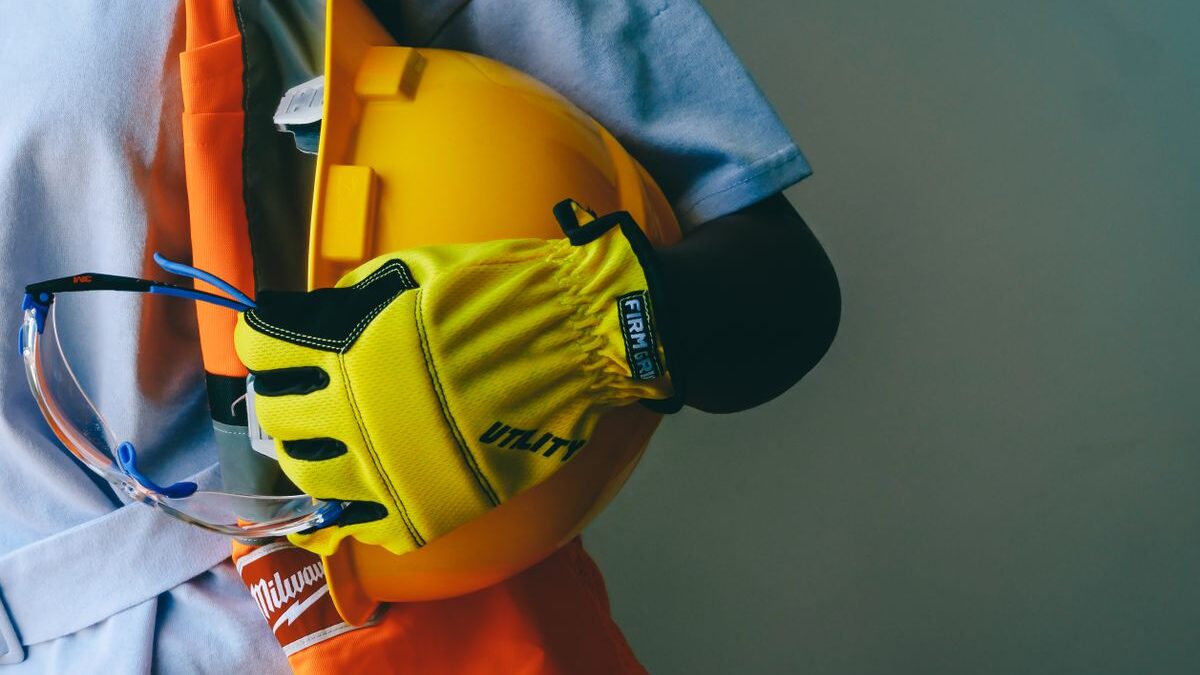


Quick Answer: The right site safety equipment depends on the specific hazards actually present on a site — falls, falling objects, noise, dust, chemicals, and moving vehicles each call for a different response. A proper hazard assessment, not a generic checklist, is what determines which combination of head, eye, hearing, respiratory, fall, and hand or foot protection a site genuinely needs.
Start With a Hazard Assessment, Not a Catalogue
It’s tempting to treat safety equipment as a standard kit — hard hat, boots, hi-vis, done. That approach misses hazards that don’t show up on a generic list and often over-provides for risks that aren’t actually present on a given site.
A hazard assessment starts with a walk-through asking a simple question for every task: what could go wrong here, and what would the consequence be? Falling objects, moving vehicles, noise, dust, chemical exposure, and working at height each point toward different equipment, and most real sites have several of these present at once, in different areas.
Equipment choice should follow directly from that assessment, updated whenever the work or site conditions change, rather than being decided once and left unreviewed.
Head, Eye, and Face Protection
Industrial head protection is generally rated for different impact types — some designed mainly for falling-object impact from above, others rated for lateral impact as well, which matters on sites with overhead work or confined spaces where a knock to the side of the head is a real risk.
Eye protection alone isn’t always enough. Tasks involving grinding, cutting, or chemical splash risk typically call for a full face shield in addition to safety glasses, since flying debris and splash can reach areas glasses don’t cover.
Any head protection that’s been struck, dropped from height, or exposed to prolonged UV should be inspected and, if in doubt, replaced — impact protection can be compromised without visible damage. Manufacturers typically stamp a date of manufacture inside the shell, which is worth checking against the recommended maximum service life rather than relying on visual condition alone.
Matching Equipment to Hazards
| Hazard type | Equipment category | What to check before use |
|---|---|---|
| Falling objects, overhead work | Head protection (hard hat) | Rated for the specific impact type; no visible cracking or UV degradation |
| Sustained loud noise | Hearing protection (plugs or muffs) | Correct fit; dual protection considered for very high noise levels |
| Dust, fumes, particulates | Respiratory protection | Correct filter rating for the specific contaminant; fit-tested to the wearer |
| Working at height | Fall protection (harness, lanyard, anchor) | Anchor point rated for the load; harness inspected for wear or damage |
| Cutting, sharp materials, chemicals | Hand protection (gloves) | Cut-resistance or chemical-resistance rating matched to the actual task |
Hearing Protection
Hearing damage from workplace noise is cumulative and often painless until it’s already happened, which is part of why it gets under-prioritised compared to more visible risks. Earplugs are cheaper and less intrusive for lower noise levels; earmuffs generally offer more consistent protection and are easier to check are being worn correctly at a glance.
In very high noise environments, both are sometimes used together, since the combined protection can exceed what either provides alone.
Respiratory Protection
A basic dust mask and a proper respirator are not interchangeable. Dust masks filter larger particles and are suited to nuisance dust; finer particulates, fumes, and certain chemical vapours need a respirator with a filter rated for that specific contaminant.
Fit matters as much as filter rating. A respirator that doesn’t seal properly against an individual’s face lets contaminated air bypass the filter entirely, which is why fit-testing, not just handing out equipment, is the part that actually determines whether the protection works.
In some environments — confined spaces or areas with oxygen displacement risk — filtering respirators aren’t sufficient at all, and supplied-air equipment is needed instead.
Fall Protection
A harness without a properly rated anchor point offers little real protection — the anchor point, not the harness alone, is what needs to be verified before work at height begins.
Harnesses should be inspected before each use for frayed webbing, damaged stitching, or a buckle that doesn’t lock securely, and taken out of service immediately if any of these are found, rather than used until a scheduled inspection catches it.
Hand and Foot Protection
Gloves are rated for cut resistance on a graded scale, and the right rating depends on the material being handled — sheet metal and glass call for a different rating than general handling tasks. A high cut-resistance rating that reduces dexterity too much for a delicate task can itself become a hazard if it leads to compensating with less protection elsewhere.
Safety boots typically combine several protections at once: a toe cap (steel or composite), a puncture-resistant sole, and sometimes electrical hazard or chemical resistance, depending on the environment. Composite toe caps are lighter and don’t conduct heat or electricity the way steel does, which matters in specific environments even though steel toe caps remain more common generally.
Equipment That Gets Overlooked
High-visibility clothing appropriate to low-light or high-vehicle-traffic areas, not just a token vest
Sun and UV protection for prolonged outdoor work, which is easy to deprioritise against more immediate hazards
Hydration and heat-stress monitoring in hot environments, particularly for physically demanding tasks
Vibration-reducing gloves for prolonged use of vibrating tools, to reduce long-term risk that doesn’t show symptoms immediately
These hazards tend to get less attention because their effects build up gradually rather than causing an obvious, immediate incident, which makes it easy to under-invest in protecting against them compared with more visible risks like falls or falling objects.
Training Matters as Much as the Equipment Itself
Protective equipment is generally considered the last line of defence, not the first. The usual order of priority is eliminating a hazard entirely where possible, then controlling it through engineering measures like guarding or ventilation, then through safe systems of work, and only then relying on personal protective equipment to manage whatever risk remains.
Equipment that’s provided but not properly explained tends to be worn incorrectly, inconsistently, or not at all. Training on why a specific item matters for a specific task, not just handing it out, is usually what determines whether it’s actually used correctly on site day to day.
This also means equipment choice should be revisited whenever the hierarchy above it changes — if a hazard is later eliminated or engineered out, the personal protective equipment needed for that task may reduce accordingly, rather than being kept indefinitely out of habit.
Maintaining and Replacing Equipment
Most safety equipment has a useful life even if it’s never been used for its intended impact — UV exposure, temperature extremes, and simple material fatigue degrade plastics and webbing over time. Manufacturer guidance on replacement intervals exists for a reason and shouldn’t be treated as overly cautious.
A simple, documented inspection routine — checked at set intervals, not just when something looks obviously wrong — catches degrading equipment before it’s needed in an emergency, which is exactly when it’s too late to discover it’s compromised.
Key Takeaways
In short
- Equipment choice should follow from an actual hazard assessment of the site, not a generic standard kit applied everywhere.
- A harness is only as good as its anchor point — verify the anchor, not just the harness.
- Respirator fit matters as much as filter rating; an unfitted respirator can let contaminated air bypass the filter entirely.
- Safety equipment degrades over time even unused, through UV exposure and material fatigue, and has a genuine replacement schedule.
- Commonly overlooked hazards — UV exposure, vibration, heat stress — deserve the same deliberate planning as more visible risks.
Frequently Asked Questions
How do I know what safety equipment a specific site actually needs?
Start with a hazard assessment: walk the site and identify what could realistically go wrong for each task being carried out, then match equipment to those specific hazards rather than applying a generic standard kit.
Is a dust mask the same as a respirator?
No. A basic dust mask filters larger particles and suits nuisance dust; finer particulates, fumes, or chemical vapours need a proper respirator with a filter rated for that specific contaminant.
How often should safety equipment be replaced?
This varies by item and manufacturer, but most equipment has a recommended replacement interval even if never used in an actual incident, since materials degrade from UV exposure and general fatigue over time.
What’s the difference between a simple hard hat rating and an impact-rated one?
Standard ratings are generally designed around impact from falling objects overhead; higher-rated helmets add protection against lateral or angled impacts, which matters in confined spaces or areas with overhead and side-impact risks together.
Why does harness fit matter if the anchor point is secure?
A poorly fitted harness can shift or fail to distribute force correctly during a fall, increasing injury risk even with a properly rated anchor point — both the harness fit and the anchor need to be right.
Stay connected