


Quick Answer: Planning a first vegetable garden starts with matching plant choices to the amount of sunlight and space actually available, not what looks appealing in a catalogue, and choosing a handful of reliable, forgiving vegetables over an ambitious full plot in the first year. Getting the timing right for your specific local climate matters more than almost any other single planning decision made early on.
Start With Sunlight, Not a Wish List
Most vegetables that produce fruit — tomatoes, peppers, courgettes, beans — need at least six hours of direct sun daily to perform well. Leafy vegetables and root crops tend to tolerate somewhat less, but very few productive vegetables genuinely thrive in deep shade.
The most common planning mistake isn’t choosing the wrong vegetable variety, it’s choosing vegetables that don’t match the actual light available in the chosen spot. Observing a potential garden site across a full day, at different times, gives a far more accurate picture than a quick glance at midday alone.
This single step, done honestly before any planting decisions are made, prevents more disappointment than almost any other piece of gardening advice, since no amount of watering or feeding compensates for genuinely insufficient light.
Matching Vegetables to Available Light
| Sunlight level | What grows well | What tends to struggle |
|---|---|---|
| Full sun (6+ hours) | Tomatoes, peppers, courgettes, beans, sweetcorn | Little struggles here, given enough water and soil quality |
| Partial sun (4–6 hours) | Lettuce, spinach, herbs, beetroot, chard | Fruiting vegetables tend to produce less and ripen more slowly |
| Light shade (2–4 hours) | Leafy greens, some root vegetables | Most fruiting vegetables struggle to produce a worthwhile harvest |
Sizing the Plot Realistically
Starting with an ambitiously large plot is one of the most common first-year mistakes, since the enthusiasm of spring planting rarely accounts for how much ongoing weeding, watering, and harvesting a large area actually demands through the full growing season.
A modest plot, or even a handful of containers or a single raised bed, fully maintained and genuinely enjoyed, teaches far more for next year than a large plot that becomes overwhelming by midsummer and is abandoned to weeds.
Containers and raised beds also offer a practical advantage for anyone unsure about their soil quality, since they can be filled with a reliable growing medium from the outset rather than depending on unknown existing ground conditions.
Understanding Your Local Growing Season
“When to plant” doesn’t have one universal answer — it depends entirely on local frost dates and climate, which vary enormously depending on hemisphere, latitude, and regional conditions. What matters is finding the average last frost date for your specific area, since that date anchors most other planting decisions.
Many vegetables can be started indoors ahead of the local outdoor planting window, then transplanted once the weather is reliably warm enough, which effectively extends a shorter growing season without needing to rush direct sowing before conditions are genuinely ready.
Local gardening groups, agricultural extension services, or experienced gardeners in the same immediate area are usually a far more reliable source for exact regional timing than a generic guide, since the same vegetable can have a planting window months apart depending on where it’s being grown.
Choosing Forgiving Vegetables for a First Year
Leaf lettuce and other salad greens — fast-growing and quick to show results
Bush beans — reliable and productive without needing elaborate support structures
Radishes — among the fastest vegetables from seed to harvest, useful for early confidence
Courgette or summer squash — famously productive once established, forgiving of minor care lapses
Cherry tomatoes — generally more forgiving and disease-resistant than larger tomato varieties
Soil: The Part Beginners Skip
Soil quality affects a vegetable garden‘s success at least as much as sunlight, yet it’s the step most often skipped by first-time gardeners keen to get straight to planting.
Working a generous amount of compost or well-rotted organic matter into the soil before planting improves structure, drainage, and nutrient availability all at once, and matters more for overall success than the specific variety of any individual vegetable chosen.
Spacing and Companion Planning
Overcrowding is a near-universal beginner habit, usually driven by small seedlings looking like they need less room than the seed packet actually recommends. Following stated spacing guidelines, even when it looks sparse at planting time, prevents competition for light, water, and nutrients later in the season.
Companion planting — growing certain plants near each other for a claimed mutual benefit — has some genuinely supported examples, like tall plants providing helpful shade for certain shade-tolerant crops, alongside plenty of folklore-based pairings with far less solid evidence behind them. Treating it as a loose, secondary consideration rather than a strict rulebook is a reasonable approach for a first garden.
Watering Realistically
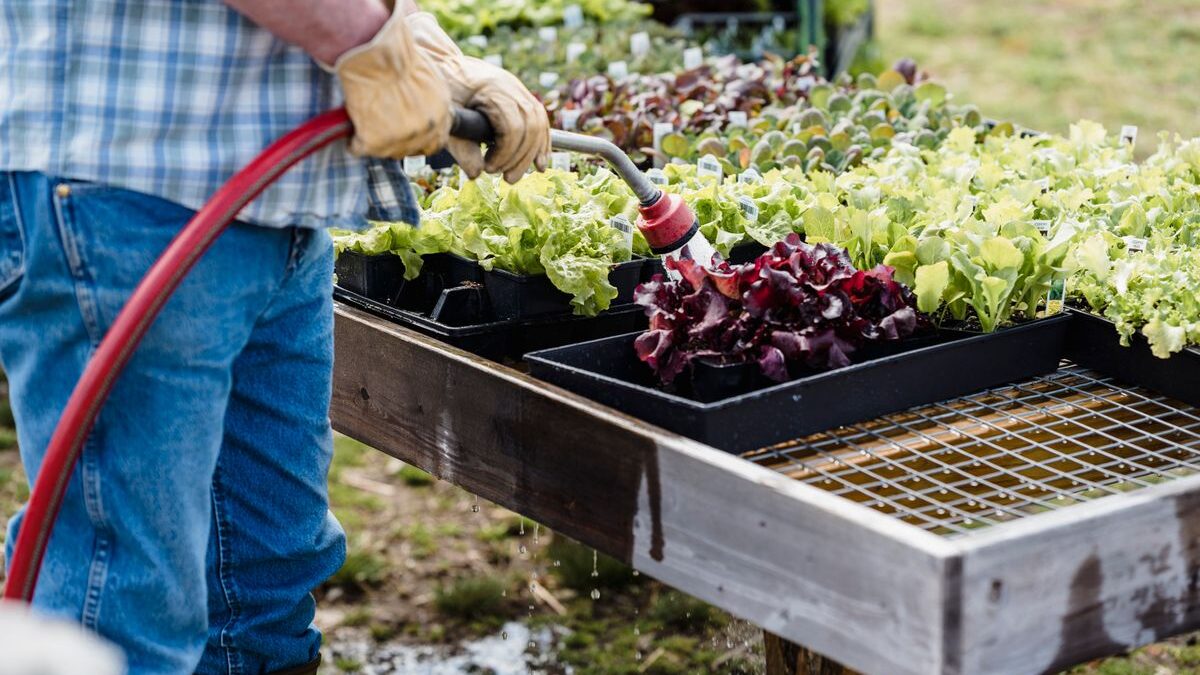
Consistency matters more than volume — a steady, regular watering routine produces better results than heavy watering followed by long dry spells, since inconsistent watering stresses plants and can affect how fruiting vegetables develop.
Watering in the morning, rather than the evening, allows foliage to dry during the day, which reduces the risk of certain fungal diseases that thrive in prolonged dampness overnight.
Checking soil moisture a couple of inches below the surface, rather than judging by how the very top layer looks, gives a much more accurate picture of whether a plant genuinely needs water or not.
Staggering Plantings for a Steadier Harvest
Sowing an entire crop of something like lettuce or radishes all on the same day tends to produce a single large glut of harvest followed by nothing, since the whole batch matures at roughly the same time.
Sowing a small amount every couple of weeks through the growing season, sometimes called succession planting, spreads the harvest out more evenly and avoids both the waste of an overwhelming glut and the gap of having nothing ready between one harvest and the next.
This technique works particularly well for fast-maturing crops that are typically eaten fresh rather than stored, since a steady, manageable supply is usually more genuinely useful to a household than one large batch arriving all at once.
Making the Most of a Small Space
Vertical growing — training climbing beans, peas, or cucumbers up a support structure — makes productive use of limited ground space, and often improves air circulation around the plants as a secondary benefit, which can reduce certain fungal problems.
Containers of a reasonable size can produce a genuinely worthwhile harvest of many vegetables, including tomatoes and peppers, making a full in-ground plot unnecessary for anyone working with a small balcony, patio, or yard.
Common First-Year Mistakes
Beyond starting too big and misjudging sunlight, planting everything on the same single weekend, rather than staggering some crops, often produces an overwhelming glut of harvest all at once followed by nothing, rather than a more manageable, steady supply.
Losing momentum on maintenance once the initial planting excitement fades is also extremely common, and is worth planning for honestly — setting a fixed, small, recurring time for garden upkeep tends to sustain a garden through the season far better than relying on enthusiasm alone.
Key Takeaways
In short
- Match vegetable choice to actual measured sunlight at the site, not to what looks appealing in a catalogue or seed display.
- Start smaller than initial enthusiasm suggests — a well-maintained small plot teaches more than an overwhelming large one.
- Local frost dates, not a generic calendar, determine planting timing, and vary enormously by region and hemisphere.
- Soil preparation with compost or organic matter affects overall success as much as sunlight or vegetable choice.
- Consistent watering, checked below the surface rather than judged by appearance alone, matters more than watering volume.
Frequently Asked Questions
How much sunlight does a vegetable garden actually need?
Most fruiting vegetables like tomatoes and peppers need at least six hours of direct sun daily. Leafy greens and some root vegetables tolerate somewhat less, but very few productive vegetables thrive in deep shade.
What vegetables are easiest for a first-time gardener?
Leaf lettuce, bush beans, radishes, courgette, and cherry tomatoes are commonly recommended, since they’re fast-growing, forgiving of minor care lapses, and give visible results relatively quickly.
How do I know when to plant in my specific area?
Find your local average last frost date, since most planting timing is built around it. Local gardening groups or agricultural extension services are more reliable for this than a generic calendar, since timing varies enormously by region.
Is soil preparation really necessary for a small first garden?
Yes — working compost or organic matter into the soil before planting significantly improves structure, drainage, and nutrients, and affects overall success as much as sunlight or the specific vegetables chosen.
How big should a first vegetable garden be?
Smaller than initial enthusiasm typically suggests. A modest plot, raised bed, or a few containers, fully maintained through the season, teaches more and produces better results than an ambitious plot that becomes overwhelming by midsummer.
Stay connected